
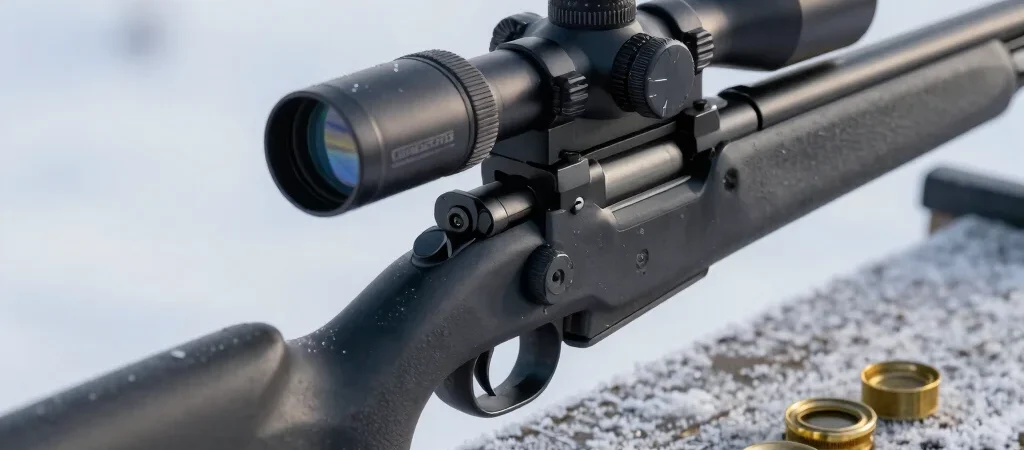
Winter shooting brings unpredictable mechanical changes that never show up during sunny summer sessions. Cold ambient air affects propellants, stiffens optic adjustments, and shortens battery life on illuminated reticles.
Tracking Point of Impact Shifts
As air density rises with dropping temperatures, bullet drag increases measurably over extended distances. Documenting your range notes across seasonal temperature drops gives you predictable holdovers regardless of weather conditions.
Managing Battery Life in Freezing Air
Lithium batteries suffer severe voltage drops when exposed to freezing bench temperatures for several hours. Keeping spare cells in an internal jacket pocket maintains thermal warmth until you need an instant swap.
Durability Check on Turret Controls
Thick winter gloves make fine windage adjustments difficult without distinct tactile detents. Verify that dial clicks remain crisp and audible before taking a precision optic into cold mountain terrain.